If you’ve recently had a baby by C section, you probably have questions about your C section scar. You may wonder how long it takes to heal, what it should look like, or what you can do to help it recover.
During a C section, your doctor makes an incision in your abdomen and uterus to deliver your baby. The C section scar you see on your skin is only part of the healing process. The tissue underneath also needs time to heal.
Knowing what to expect can help you care for your scar and feel more confident during your recovery.
What Is Scar Tissue?
As your C section scar heals, your body makes new collagen fibers to close and strengthen the incision. This new tissue is called scar tissue. It’s your body’s natural way of repairing itself after surgery.
When scar tissue first forms, it isn’t as flexible as the original tissue. That’s why your scar may feel tight, firm, numb, or sensitive at first. These changes usually improve as healing continues.
What Does a C Section Scar Look Like?
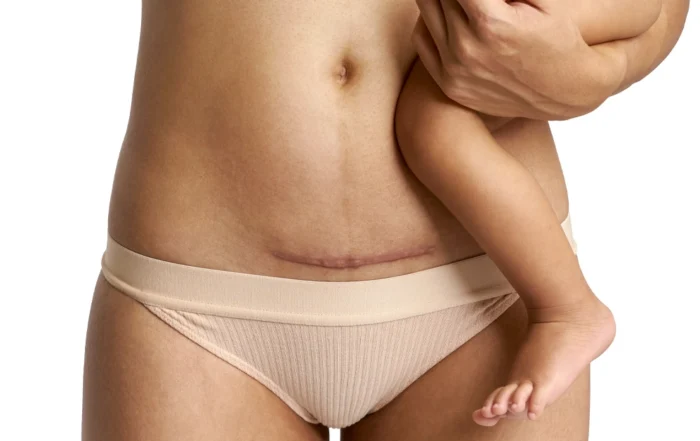
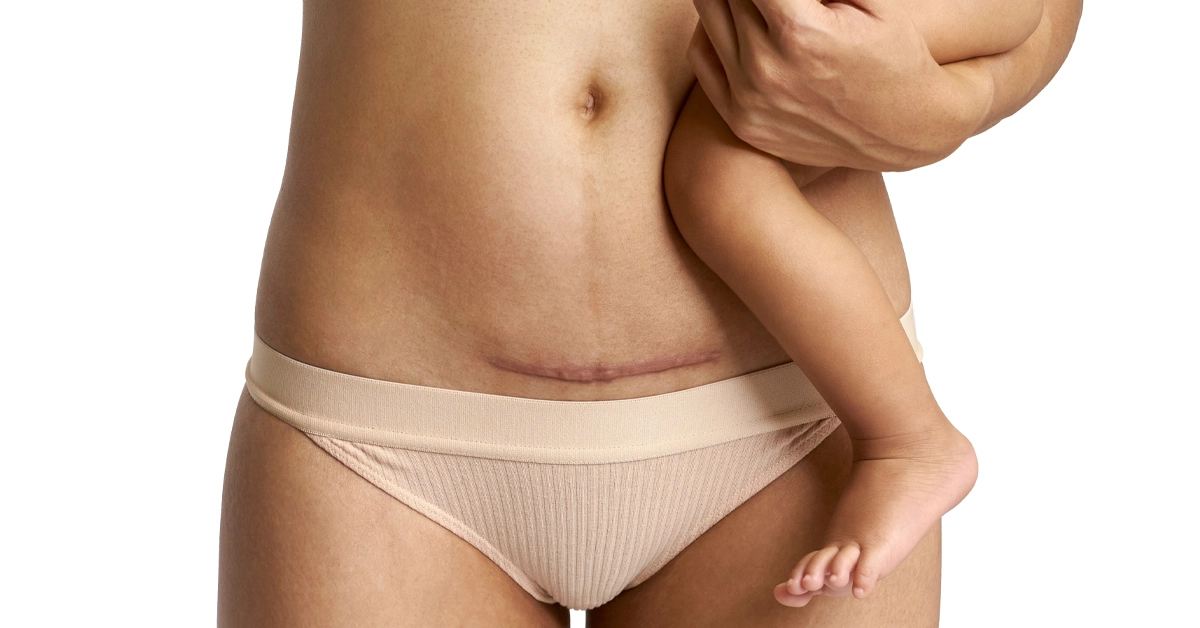
Most C section scars are low on the abdomen, just above the pubic hairline. The scar may look red, pink, purple, brown, or darker than the surrounding skin, depending on your skin tone.
Over time, many scars become flatter and lighter. Others may stay darker, wider, raised, or firm. It’s also common for the center of the scar to feel numb while the skin around it feels more sensitive. Every woman heals a little differently.
What Happens Beneath a C Section Scar?
The scar you see on the outside is only one part of healing. The tissue beneath the skin, including the fascia and abdominal wall, also needs time to recover.
It’s common to notice numbness, tenderness, or a small shelf above or below the scar. These changes can feel strange, but they’re often a normal part of healing and may improve over time.
How Long Does a C Section Scar Take to Heal?
Healing happens in stages. Even after your incision looks closed, the deeper tissues are still recovering.
The First Few Weeks
During the first several weeks, your incision continues to heal. Soreness and swelling should slowly improve. During this time, avoid heavy lifting or activities that put too much strain on your abdomen. Follow your doctor’s instructions to help your incision heal properly.
The Next Several Months
Your C section scar continues to change long after the incision closes. The scar may feel firm before it softens. It may itch as it heals or become more noticeable before it begins to fade. Full healing often takes several months.
How to Care for Your C Section Scar During the First Few Weeks
Early C section scar care is simple but important. Your body needs time to heal before you begin any scar treatments.
Keep the incision clean and dry, and follow your discharge instructions. If you have steri-strips, glue, staples, or a dressing, follow your doctor’s instructions for when they should be removed. Wearing loose clothing can also help prevent irritation.
Don’t scrub the incision or apply creams, oils, or scar products unless your doctor says it’s safe.
How to Care for Your C Section Scar After It Heals
Once your incision is fully closed and your doctor says it’s safe, you can do more to care for your C section scar. Gentle movement, scar massage, and protecting the area can help reduce tightness and make your C section scar more comfortable as it heals.
Stay Active
Light activity, such as walking, helps improve blood flow and supports healing. As your body recovers, gentle stretching and normal daily movement can also help reduce stiffness. Avoid activities that cause pain or put too much strain on your abdomen until your doctor says it’s safe. Start slowly, and stop if an activity causes pain or discomfort.
Try C Section Scar Massage
Gentle scar massage may help reduce tightness, improve flexibility, and make the area feel more comfortable. Start with light circles around the scar, then slowly work closer to the scar itself as your doctor recommends.
Scar massage shouldn’t cause sharp pain. If it hurts, stop and talk with your doctor.
Protect Your C Section Scar
Your scar may be more sensitive while it heals. Wear clothing that doesn’t rub the area, and protect the scar from the sun if it’s exposed. Sun exposure can make a scar become darker and more noticeable.
Ask Before Using Scar Products
Don’t use scar creams, gels, or silicone sheets until your incision has completely healed and your doctor says they’re safe. Using products too soon may slow healing or irritate the incision.
If your doctor recommends a scar product, ask:
- When to start using it
- Which type is best for your scar
- How often to use it
If your scar becomes raised, thick, painful, very itchy, or develops into a keloid, your doctor can recommend treatments that are safe for your stage of healing.
When Should You Call Your Doctor About Your C Section Scar?
Some discomfort is normal while your C section scar heals. But you should contact your doctor if you notice:
- A fever
- Worsening pain
- Increased redness
- New swelling
- Drainage from the incision
- A bad odor
- The incision opens
These symptoms could be signs of an infection or another problem that needs medical care.
Concerned About Your C Section Scar?
Most C section scars heal well with time, but every woman heals differently. If your scar is painful, feels unusually tight, isn’t healing as expected, or you’re concerned about how it looks, don’t ignore it.
The providers at Women’s Health Center of Southern Oregon help women throughout Grants Pass and Ashland, OR recover after pregnancy and heal safely after a C section. If you have questions about your C section scar, schedule an appointment with our team today.
Related:
Find Your Care
Our team of OB/GYN specialists is ready to assist you. To schedule an appointment, please call us at 541-479-8363.